From Fan Art to Bestiary: My Journey Creating a Black Myth: Wukong Character Journal
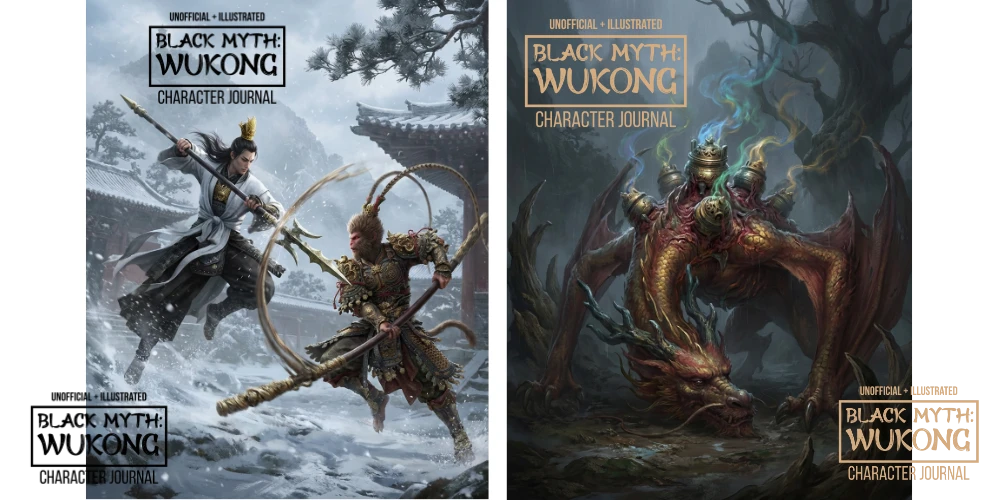
Every creative project begins with a spark, that one weird moment where inspiration and a wild idea marry. A moment when inspiration hits hard enough that you can’t ignore it. For me, that spark came from Black Myth: Wukong. This games 16th century Chinese folklore and its unique character design, combined with its mythic atmosphere, grabbed me by the hand and refused to let go. What started as simple admiration for the game’s artistry evolved into a months-long creative odyssey. I initially ended up with a 400 page, 200 character journal in 2025. After sitting on it and sharing it with a friend who urged me to do something with it, I recreated it.
YEAH, I started back over. I had holiday downtime, and it felt like a good idea at the moment. The revised work was completed in Winter 2026, a 172‑entry bestiary, with an accompanying 72-page collection of adult coloring pages.
Black Myth: Wukong is mainly based on Journey to the West. Beautiful literature. But this is the story of my journey. This madness: part fan art, part experimentation, part obsession, and entirely fueled by the joy of learning new art styles through AI.
Step 1: Capturing the Characters, One Portrait at a Time
The foundation of the project began with the in‑game character journal entries and the developer’s concept art. Although some characters changed in the final version of the game. The basis, the core, of their physical identity was there. These weren’t just references; they were the DNA of each creature (Yaoguai) in the world of Black Myth. If this step was done incorrectly, none of the other steps even matter. The purpose of the project was to get the imagery right. This was initially the reason I wanted to utilize AI: to speed up the brainstorming process. The magic happens when you can direct the AI with the appropriate prompt. Until you get that right, you're just wasting time. So I learned how to reverse engineer. I show AI what I'm looking for and ask the appropriate questions, and then apply the art direction and guidance to the materials I'm working with. The more descriptive, but concise, the better. You can give too much information, and AI will just overcomplicate your results. (Below) No Concept art existed for these characters; this was created from narrative and detailed prompt direction. These are step 1 images for a character set.
I took each character (all 200 of them) and created individual portraits.
- Reading and analyzing the character bios
- Studying their personalities, recalling their in-game roles
- Extracting the most cinematic and picturesque moment from their bios
- Preserving the spirit of the original character designs
- (What do I wish they had exposed me to?)Reimagining them through my own artistic lens
This project was designed to pay homage to the work that Gamescience painstakingly executed. This step alone took hundreds of iterations. Some characters yielded beautiful results immediately; others fought me every step of the way. 12 to 15 attempts on some occasions. But each one taught me something new about composition, lighting, and the subtle art of visual storytelling. Every little detail does count. Please sweat the small stuff
Step 2: Blending Art Styles (Chinese Watercolor, Woodblock Printing, and Irezumi)
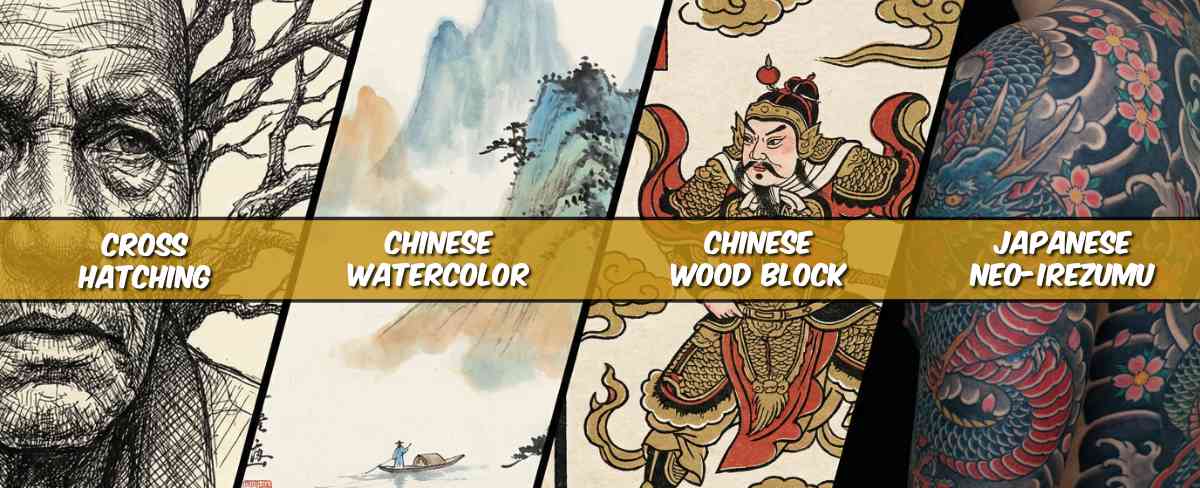
Once the base portraits were complete, the real experimentation began.
As a graphic designer [by trade], I was looking for ways to incorporate AI into my personal workflow. This project allowed me to work on something other than my typical promotional swag product and to reignite the passion for design I'd been missing. I wanted the journal to feel Modern yet semi-ancient, mythical, and culturally rooted. I didn't want your standard set of screenshots or typical fan sketches. So I layered multiple niche art styles together. That's the beauty of AI. The time from concept to manifestation is dramatically sped up.
*The art prompt instructions for the 2nd phase referenced watercolor, woodblock, and cross-hatching styling.
Chinese Watercolor Painting
Soft gradients, flowing ink, atmospheric washes. This gave each character image a lighter feeling. The imagery is pretty dark in feeling.
Chinese Woodblock Printing
This added a tactile structure: bold outlines, carved textures, and a tactile, handcrafted feel. (even though it was all digital)
Double Cross‑Hatching
This technique brought more grit and depth, perfect for the game’s darker, more monstrous macabre designs. (It is called Black Myth)
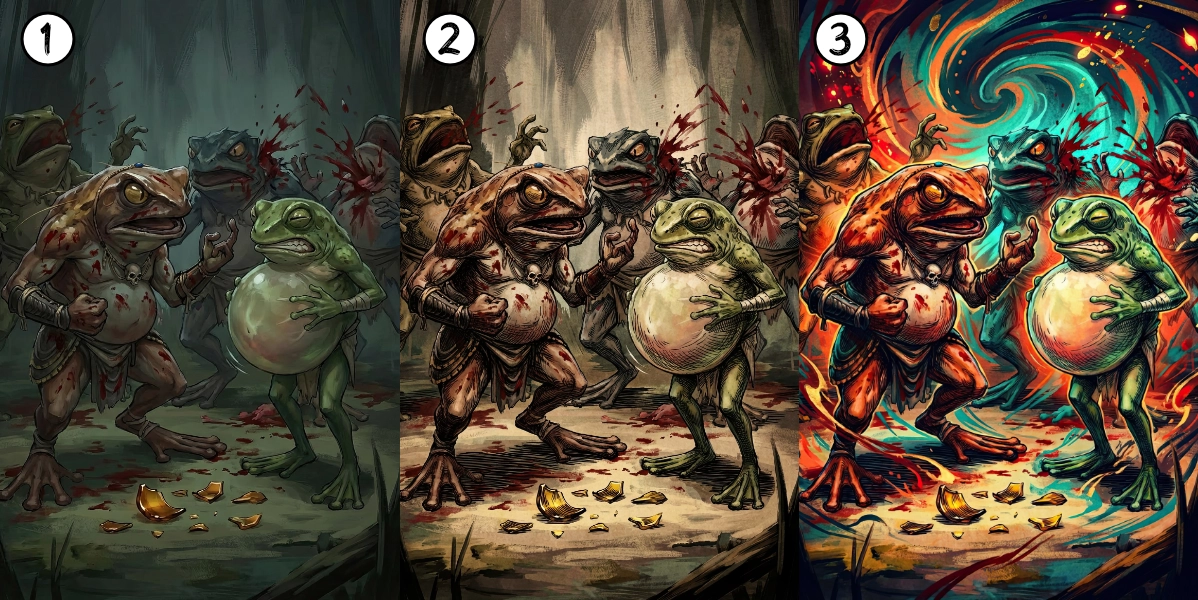
This step was completed for 200 characters as well.
I switched to a Neo-Irezumi style. I tried traditional Irezumi, but AI seemed to want to apply the artwork to people as if it were tattooing them. I also had to introduce a negative clause to keep the AI from introducing people into the result. Irezumi historically has a tie to the Yakuza so let your mind wander with that fact.
Japanese Irezumi Influence
Finally, I applied the bold, symbolic, high contrast, ultra-vibrant tone of traditional tattoo art. This step unified the entire collection, giving the characters a dramatic, iconic presence. This resulted in a hybrid style that felt both ancient and modern. Something that was akin to and honored the game’s cultural roots while still being unmistakably my own.
Step 3: Rewriting the Character Bios, Respect the Source, Adding My Voice
The visual art was only half the challenge. Each character in Black Myth: Wukong has its own lore, personality, and mythic weight. I didn’t want to copy the in‑game bios, but I needed people to recognize the story. I wanted to reinterpret them. So with the help of AI again, I familiarized myself with multiple programs. Before this, I had NO exposure to these regenerative engines. We started with Claude (Antropic), tried Gemini (Google DeepMind), ChatGPT (OpenAI), and even CoPilot (Microsoft). Each has its own nuances and styling. Claude was very professional, ChatGPT was user-friendly and casual, Gemini and CoPilot were in the middle; depending on the instructions, they could be very casual or professional.
These are my personal opinions; you can be like my children and ignore me. Disregard anything I say that doesn't apply to you. Thanks, and moving on. LOL
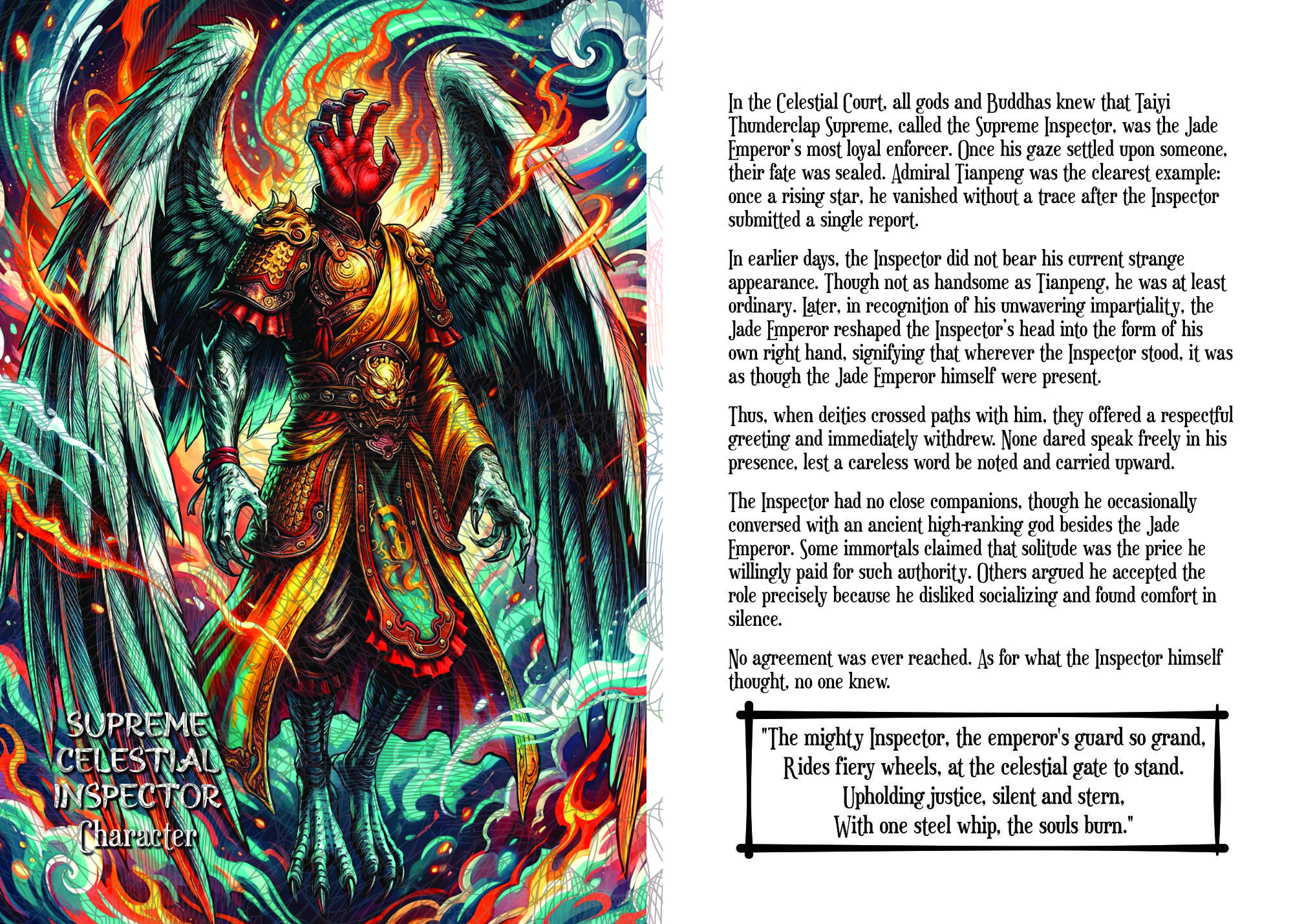
So after I:
- Analyzed each of the original entries
- Summarized the core themes and lessons of the story
- Preserved the tone and sentiment
- Rewrote them with fresh language and narrative emotion
The goal was to create something familiar yet distinct. I wanted a parallel telling of the same dark, dank, mythic world. This was single-handedly one of the most unexpected and rewarding parts of the project. It forced me to think like a storyteller, not just an artist. I had to ascertain what was important and what was trivial about each of the short stories, and do it quickly. It also gave me a significant appreciation for Journey To The West and a cultural understanding of why this piece of literature means so much to Chinese culture.
Step 4: Compiling the Bestiary, One Unified World
After much consideration, I decided to reduce the page count to 172 to reduce costs and character relevance. After hundreds of images and rewritten bios, I assembled everything into a printed bestiary. I've done numerous catalogs, books, and print materials. It's a little different when you're not getting paid and still putting in 70-80 hours of design time. I wanted to create something that people would want to take the time to read, browse, and enjoy. I wanted a physical journal that feels like something you’d find tucked away on a DND (Dungeons and Dragons) shelf. This was a true geek moment, and I wanted to hug the s**t out of my inner geek.
Holding the first finished book for the first time was nuts. It was really surreal; it wasn’t just fan art anymore; it was a complete artifact, a world between two covers. I could see my heart and passion in those pages.
Step 5: Creating Adult Coloring Pages
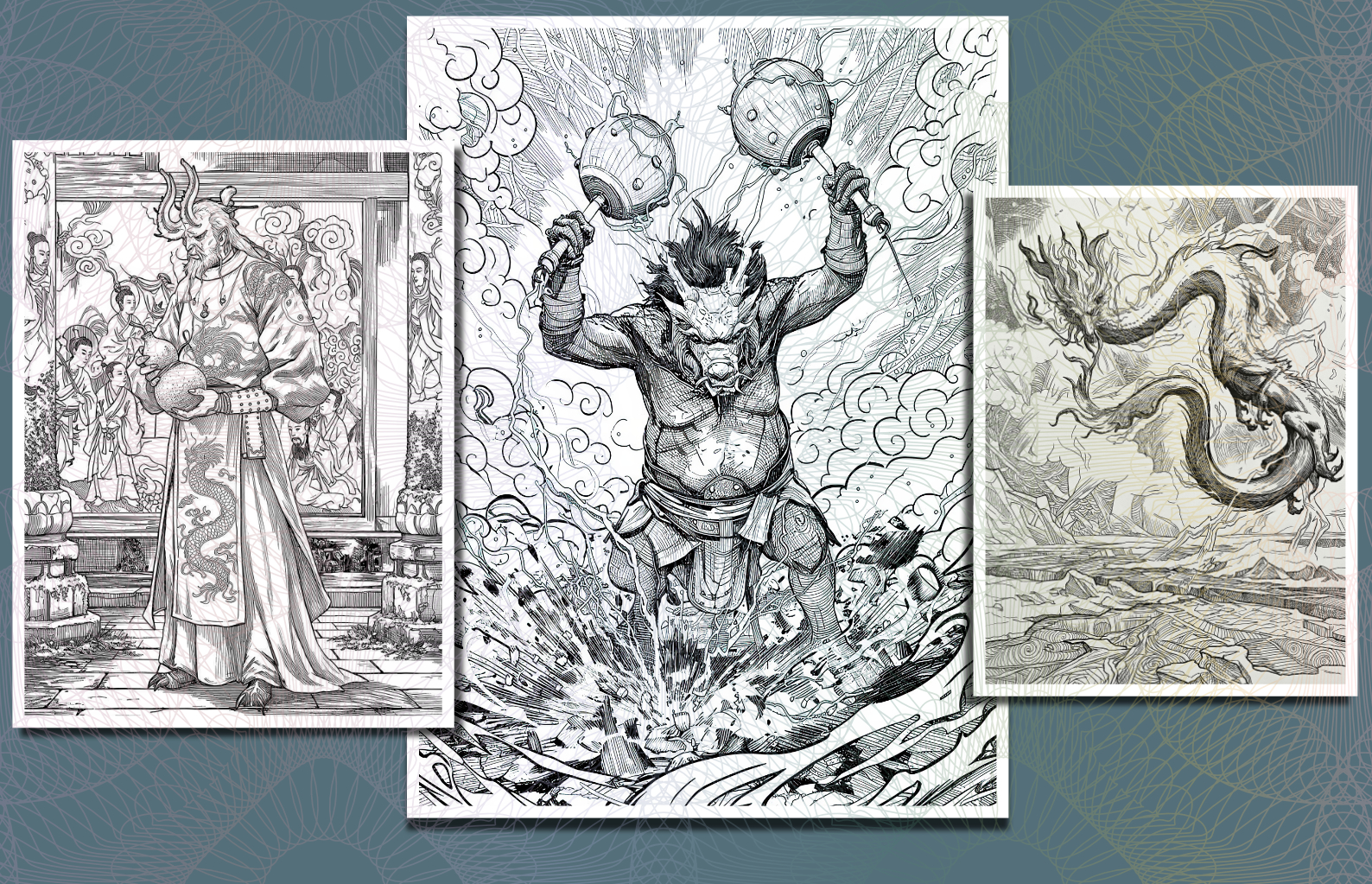
During the portrait creation process, I generated countless iterations and drafts trying to find the correct style and feel. Some came fast, while others fought back like real combatants. So, instead of letting them sit unused, I transformed them into a full set of adult coloring pages.
I envisioned these pages could become:
- A creative outlet for fans
- A way to share the project with a wider audience
- A bridge between digital art and hands‑on creativity
It felt like the perfect final evolution of the project. I decided to turn my own artistic exploration into something others could interact with.
What This Journey Taught Me
This project wasn’t just about fan art. It was about:
- Learning new art styles ✔️
- Experimenting with AI as a creative partner ✔️
- Pushing through hundreds of iterations (1200+) ✔️
- Blending cultural aesthetics with modern tools ✔️
- Building something bigger than I originally imagined ✔️
- Learned a little about Buddhism, Taoism, and Confucianism ✔️
Most of all, it reminded me that creativity thrives when you let yourself explore. When you follow the spark, even if it leads you somewhere unexpected, it can be beautiful. Sometimes, some of us control freaks need to just let go and see where the creative ride is going to take us.
A Final Reflection
What began as admiration for a magnificent game became a full creative pilgrimage. Literally and figuratively. I learned new techniques, developed a hybrid art style, re-wrote lore, designed a book, and created a coloring book; all from a single source of inspiration. And that’s the beauty of modern creativity. With AI, traditional art, and a bit of stubborn passion, you can build worlds of your own.
[If you’d like, you can view a quick preview of the book. This is a proofing hardcopy I shared on my YT streaming channel.]